
Most roof maintenance checklists are written for the Midwest. They cover ice dams and hail. Neither applies to your roof in Richmond, Walnut Creek, or Dublin.
The Bay Area has two windows that matter: pre-storm prep (August-October) and post-storm assessment (March-May). In between, fire season and the marine layer add tasks that no national checklist covers. This roof maintenance checklist is organized around those windows.

Quick-Reference: Bay Area Roof Maintenance Checklist by Season
| Season | Timing | Key Tasks | DIY or Pro |
|---|---|---|---|
| Pre-Storm Prep | Aug-Oct | Ground inspection, gutters, pipe boots, flashing, tree trim, attic check | Mix |
| Wet Season | Nov-Apr | Post-storm visual, attic check after rain, gutter mid-season top-up, moss monitoring | DIY |
| Spring Assessment | Mar-May | Granule check, flashing follow-up, biological growth treatment, shingle condition | Mix |
| Fire / Dry Season | May-Aug | Debris clearance, ember vent screens, UV check on south/west slopes, tree trim | DIY |
Pre-Storm Prep Season Checklist (August-October)
This is the window where doing nothing costs the most.
Atmospheric rivers can arrive as early as late October, delivering 3-8 inches of rain in 24-48 hours. Bay Area contractors book out in September. The homeowners who call for emergency tarping in November are almost always the ones who were going to “deal with it next spring” the spring before.
Work through these eight items before the first November rain.
Warning: The August-October Window Closes Fast
Bay Area roofing contractors fill their fall schedules in September, not October. If a concern showed up in your spring walkthrough and you noted it to address “before winter,” now is the time. Once atmospheric rivers arrive, the only option left is emergency tarping.
1. Ground-level roof inspection (binoculars required)
Walk the perimeter with binoculars. On asphalt shingle roofs, look for curled or cupped shingle edges, missing granules exposing dark asphalt beneath, cracked ridge caps, and any shingles pulling away from the surface. On older homes with 3-tab shingles, cracking along the tab slots is the early failure sign. For tile roofs, look for lifted or cracked tiles, and check valleys where two roof planes meet for debris accumulation.
DIY: Yes. From the ground only. Foot traffic causes granule loss and can crack aged shingles.
2. Full gutter and downspout cleaning
A single blocked downspout during a 4-inch atmospheric river event can push water behind the fascia, saturate rafter tails, and wick up under shingles at the eave.
Homes with eucalyptus, pine, or mature oak overhang need quarterly cleaning, not twice a year. These trees drop bark, needles, and seed pods that compact into mats blocking drainage before the gutter looks full.
DIY: Yes for single-story. Pro recommended for two-story or significant tree overhang requiring ladder height.

Aging gutters showing rust, separation at seams, or pulling away from the fascia are worth evaluating for gutter installation rather than another cleaning cycle.
3. Downspout discharge extension check
Discharge should terminate at least 4-6 feet from the foundation. Short discharge saturates soil at the foundation and causes crawlspace moisture intrusion.
DIY: Yes.
4. Tree branch trimming to 10-foot clearance
Branches within 10 feet deposit debris continuously, shade north-facing slopes where moss takes hold, and create impact risk in high-wind events. Diablo Winds arrive in late October to early November, bringing 30-70 mph offshore gusts across the East Bay hills. After any Diablo Wind event, do a follow-up ground-level check for displaced ridge caps, lifted shingle edges, and debris in gutters and valleys.
DIY: Ground-level pruning. Pro: chainsaw work, ladder height, or anything near power lines.
5. Pipe boot and vent collar inspection
Rubber pipe boots degrade under Bay Area UV and thermal cycling in 7-10 years. With binoculars, look for rubber that appears cracked, shrunken, or pulling away from the pipe. This is one of the most common sources of wet-season leaks.
DIY: Visual from gutter level. Replacement: Pro.
6. Flashing inspection (chimney, skylight, wall, valley)
Flashing is the #1 source of Bay Area roof leaks: step flashing at walls and dormers, valley flashing where roof planes meet, chimney flashing, and skylight curbs. Sealant around skylights and pipe boots dries out in 7-10 years under Bay Area UV.
Check for a chimney cricket (the peaked saddle structure behind the chimney that diverts water). Chimneys wider than 30 inches require a cricket under California building code. Missing or deteriorated chimney crickets are a consistent source of wet-season leaks on East Bay homes, and one of the most commonly overlooked items in a homeowner visual.
Also check the drip edge along eaves and rakes. This L-shaped flashing protects fascia from runoff and is absent on many older Bay Area homes. Rust staining on fascia boards below the roofline is the giveaway.
Fog-belt homeowners in Richmond, El Cerrito, Berkeley, and Oakland: galvanic corrosion accelerates where aluminum flashing contacts steel gutters or copper fittings. Orange-brown staining running down from flashing joints is the sign.
Many Bay Area homes have skylights from the 1990s or early 2000s. Self-flashing plastic-curb skylights from that era are at or past their design life. When the curb fails, skylight installation with a properly integrated metal-curb system is the fix.
DIY: Visual from gutter level. Any repair: Pro.
7. Attic inspection (moisture, pests, ventilation blockage)
Your attic shows roof problems before your ceiling does. Look for water staining on rafters or sheathing, soft or darkened wood, displaced insulation, and animal activity around vent penetrations. Blocked ridge and soffit vents accelerate shingle aging from below and can void manufacturer warranties. In East Bay fire hazard severity zones (WUI zones), vent covers must meet the ember-resistant ASTM E2886 standard. Check that screens are intact.
DIY: Yes.
8. Tile roof: schedule professional assessment
Tile lasts 30-50 years (concrete) or 50-100+ years (clay). The underlayment beneath does not. Tile underlayment, whether older hot-mop felt or Type 30 felt, has a design life of 20-30 years. On homes built between 1985 and 2000, the underlayment may be failing while the tile looks intact from the street. Water penetrates under cracked or lifted tile, saturates degraded underlayment, and causes interior staining long before exterior tile shows failure. HOA communities including Blackhawk, Gale Ranch, Canyon Lakes, Windemere, and Bent Creek have high concentrations of tile roofs from this era.
Pacific Coast Roofing Service offers preventative maintenance and leak repair on tile roofs. For tile roofs from this era, calling before symptoms appear is the right move.
Wet Season Monitoring Checklist (November-April)
If pre-storm prep was done, the wet season is about monitoring. The goal is catching problems early enough to address them before the next storm, not starting from scratch.
1. Monthly gutter check during leaf drop (November-December)
Gutters cleaned in October can be half-full by December in Walnut Creek, Orinda, and Lafayette. Oak leaf drop runs October through December. A mid-November check takes 20 minutes.
DIY: Yes.
2. Post-storm visual after each significant atmospheric river event
About 80% of Bay Area annual rainfall arrives November through April. After each significant event, walk the perimeter with binoculars within 48 hours. Look for anything displaced, missing, or in the gutters that was not there before.
DIY: Ground-level only.
3. Attic check after each major rain event
The attic gives you 1-3 storm events of lead time over a ceiling stain. New water staining on rafters or insulation after a storm is the first infiltration indicator.
DIY: Yes.
4. Monitor north-facing slopes for moss and algae
Wet season plus marine layer fog is the growth window for Gloeocapsa magma (the cyanobacteria behind dark roof streaks) and moss. Spring is the treatment window; winter is when you detect it. Fog-belt homeowners in Richmond, Albany, Berkeley, Oakland, and Hayward: north-facing slopes can stay damp 3-4 days after rain under the marine layer. If you see dark streaking or green growth in January or February, note it for spring.
DIY: Detection yes. Treatment: spring.
5. Interior ceiling and wall check after rain events
After every significant rain, check ceilings and upper walls near roof transitions: skylights, chimney, anywhere a wall meets the roofline. Rust-colored rings or yellowish staining are flashing failure signals. If new staining appears and you have a tile roof, call Pacific Coast Roofing Service. Do not wait for the next storm.
Tile roof note: staining with no obvious exterior damage usually means underlayment failure. Intact tile can pass water at failed underlayment seams for full wet seasons before any exterior indication.
Spring Assessment Checklist (March-May)
The wet season just tested your roof. Now find out what it revealed.
1. Granule accumulation check (gutters and downspout discharge areas)
Check gutter sediment and downspout discharge areas. Granules look like coarse black or gray sand. Heavy, consistent accumulation year after year on a roof 10+ years old signals you are in the last 20-25% of the shingle’s useful life. Granules are the UV and fire protection layer on asphalt shingles. Once gone, the asphalt binder is exposed directly to sun and cracks. No maintenance restores them.
DIY: Yes.
2. Full flashing assessment
Flashing that was marginal in October and survived the wet season has now been tested by atmospheric rivers. If it leaked, address it before next season. For step flashing at dormers and chimney flashing, look for separation, rust streaking on the exterior wall, or lifted edges. Also verify the drip edge condition along eaves: winter runoff that bypasses the drip edge causes fascia rot and eventually rafter tail damage.
Pro: Any flashing repair. Pacific Coast Roofing Service handles flashing as part of tile roof work and full replacement projects. For isolated shingle-roof flashing repairs, contact a general roofing contractor.
3. Biological growth treatment (moss, algae, lichen)
Spring is the right treatment window: before summer UV sets in, while growth is still active. ARMA’s published method is a 50/50 mix of laundry-strength liquid chlorine bleach and water, applied with a low-pressure sprayer, left to dwell for 15-20 minutes, then rinsed at low pressure.
Do not pressure wash. ARMA states that pressure washing causes granule loss and premature roof failure, regardless of nozzle setting. Once granules are stripped, they cannot be reattached.
Do Not Pressure Wash Your Roof
ARMA’s published guidance is clear: pressure washing strips granules from asphalt shingles regardless of nozzle setting or pressure level. Granules cannot be reattached. A single pressure wash can shorten a serviceable roof’s remaining life by years. Use the low-pressure bleach-and-rinse method described above.
For lichen (the crusty gray-green growth), get a professional assessment. Lichen has root-like structures that penetrate the shingle surface and cause damage that outlasts the organism.
At replacement time, GAF Timberline HDZ shingles with StainGuard use copper-infused granules that inhibit Gloeocapsa magma. That is the permanent solution for fog-belt north slopes.
Note: Pacific Coast Roofing Service does not offer roof cleaning. This is DIY guidance.
4. Shingle condition assessment
Ground-level binocular scan: look for curling (edges turning upward), cupping (center bowing downward), cracking, or missing shingles from high-wind wet-season events. On older homes with 3-tab shingles, cracking through the tab slots is a sign the roof has passed its service window. On architectural shingles, granule loss and cupping appearing together typically means the asphalt binder has dried past recovery.
DIY: Ground-level visual.
5. Ventilation clearance check
Ridge vents and soffit vents can be blocked by winter debris, pest nesting, or displaced insulation. Blocked ventilation accelerates shingle aging from below and can void GAF and CertainTeed manufacturer warranties. Per NRCA guidance, adequate attic airflow is a maintenance requirement, not a one-time installation item.
DIY: Soffit vent check from ladder. Full attic airflow assessment: Professional.
6. Pipe boot and sealant re-inspection
If winter revealed sealant issues around pipe boots, skylights, or chimney caps, address them now. Summer UV hardens sealant applications prematurely; spring repairs cure more durably.
Pro: Replacement of failed pipe boots.
Fire and Dry Season Checklist (May-October)
National checklists skip this window. In the East Bay, May through October is the season when debris accumulates in gutters and valleys, UV bakes the asphalt binder, and homes across the East Bay hills face ember-ignition risk during red flag warning events. Debris clearance and vent screening are fire-safety tasks here, not just roofing maintenance.
WUI Zone? This Section Is Not Optional
Homes in California Fire Hazard Severity Zones face requirements under Chapter 7A that go beyond standard maintenance. Ember-resistant vent screens, debris-free gutters, and roof material ratings are code requirements, not suggestions. Check your parcel at Cal Fire’s FHSZ viewer. If you are in a Moderate, High, or Very High zone, work through every item in this section.
1. Debris clearance from gutters and roof valleys
Dry eucalyptus bark, pine needles, and seed pods in gutters and valleys are combustible. A Class A-rated roof does not protect a structure if the gutters are full of dry fuel during a red flag warning. The 1991 Oakland firestorm destroyed approximately 3,500 homes; ember ignition via Diablo-style winds was the primary mechanism. In WUI zones, debris-filled gutters are not a deferred maintenance item. They are an active fire hazard.
East Bay hill homeowners in Oakland, Berkeley, Orinda, Lafayette, Walnut Creek, Concord, and Clayton should treat this as a fire-safety task from May forward.
DIY: Yes.
2. Ember-resistant vent screen inspection
In California fire hazard severity zones, Chapter 7A requires vent covers meeting ASTM E2886 standards. These 1/16-inch mesh screens block ember intrusion into attic spaces. A single ember carried by a Diablo Wind event can ignite an attic fire even on a roof that meets Class A material requirements under ASTM E108. The screens are the last line of defense once embers reach the roofline.
Red flag warning periods often coincide with PG&E Public Safety Power Shutoff (PSPS) events. During those windows, ember-resistant vent integrity matters most, since fire response times and neighborhood evacuation are both affected. Intact screens are not optional maintenance in WUI zones.
Cal Fire’s February 2025 LRA FHSZ map update reduced Berkeley’s Very High zone from 1,269 to 454 acres and Oakland’s total hazard acreage by approximately 35%. Significant areas in the upper East Bay hills still carry Very High designations. Ember-ignition risk does not stop at map boundaries.
DIY: Visual inspection. Screen replacement: Pro.
3. South- and west-facing slope inspection
UV exposure is most intense on south- and west-facing slopes: blistering, fading, and brittle shingles appear here first. Inland homeowners in Walnut Creek, Concord, Danville, Livermore, and Pleasanton face summer heat closer to inland California patterns. Thermal cycling stresses shingle adhesive strips and granule bonding over years, and the damage appears on these slopes before anywhere else on the roof.
DIY: Binoculars from ground.
4. Attic temperature check
On a hot afternoon, check attic temperature. Above 150 degrees Fahrenheit indicates ventilation failure, which accelerates shingle aging from below. A functioning ridge and soffit vent system keeps attic temperatures within 10-15 degrees of ambient.
DIY: Yes.
5. Tree trimming follow-up
Dry branches over a roof are both a debris source and a direct ignition risk. If 10-foot clearance work was skipped in fall, do it now before fire season peaks.
DIY: Ground-level pruning. Pro: ladder height, chainsaw work, or proximity to utility lines.
6. Begin planning pre-storm prep (late August)
Contractor availability drops sharply in September. If a tile roof is due for underlayment assessment, a shingle roof is 15+ years old, or your spring walkthrough points to a replacement, contact Pacific Coast Roofing Service in August.
For Berkeley roofing or Walnut Creek roofing projects, the same timing applies: scheduling in August puts you ahead of the fall rush.
What to Check Inside Your Home
Interior signs of a roof problem appear 1-3 storm events before a ceiling stain is visible.
Ceiling stains (brown, yellow, or rust-colored rings): Typically indicate flashing failure, a failed pipe boot, or a compromised skylight curb. The stain location is not always directly below the entry point; water travels along rafters before dropping.
Attic staining on rafters or sheathing: Brown rings or streaking on wood surfaces. Earlier-stage infiltration than ceiling stains, often by 1-3 rain events.
Soft or spongy fascia at the roofline: Compressed fascia board means long-term gutter overflow has rotted the wood behind it.
Musty attic odor without visible staining: Can indicate condensation from inadequate ventilation rather than active infiltration.
Visible light through attic roof decking: Gaps in older homes worth checking on a bright day.
Any of these signs warrant a professional call. Pacific Coast Roofing Service handles tile roof leak repair and preventative maintenance. For shingle roofs, interior signs combined with a roof approaching 15-20 years old are the signal to evaluate roof replacement rather than continued repair.
DIY or Professional? A Clear Line for Each Task
| DIY (Ground-Level or Safe Ladder Work) | Professional Required |
|---|---|
| Ground-level binocular inspection | On-roof walking or inspection |
| Single-story gutter cleaning | Two-story gutter work with heavy tree overhang |
| Attic interior inspection | Any flashing repair or replacement |
| Debris removal from ground-accessible areas | Pipe boot replacement |
| Biological growth treatment (bleach method) | Tile underlayment assessment |
| Interior ceiling and attic stain detection | Any leak investigation requiring roof access |
| Ground-level tree pruning | Tile repair or adjustment |
| Downspout extension installation | Ridge cap replacement |
| Ember vent screen visual check | Screen replacement or vent repair |
Safety note: A binocular inspection from the ground catches approximately 80% of what a roof walk-up finds. Reserve ladder work for gutters and attic vents.
CSLB: Any roofing contractor in California performing work over $500 in labor and materials must hold a valid CSLB Class C-39 license. Verify at cslb.ca.gov.
The NRCA and ARMA both recommend biannual professional assessments: fall before wet season and spring after. For tile roofs, Pacific Coast Roofing Service can assess underlayment condition before an active leak develops.
When Maintenance Stops Making Sense (Knowing When to Replace)
At some point the arithmetic shifts. Every maintenance dollar spent on a roof past its useful life competes with the amortized cost of replacement.
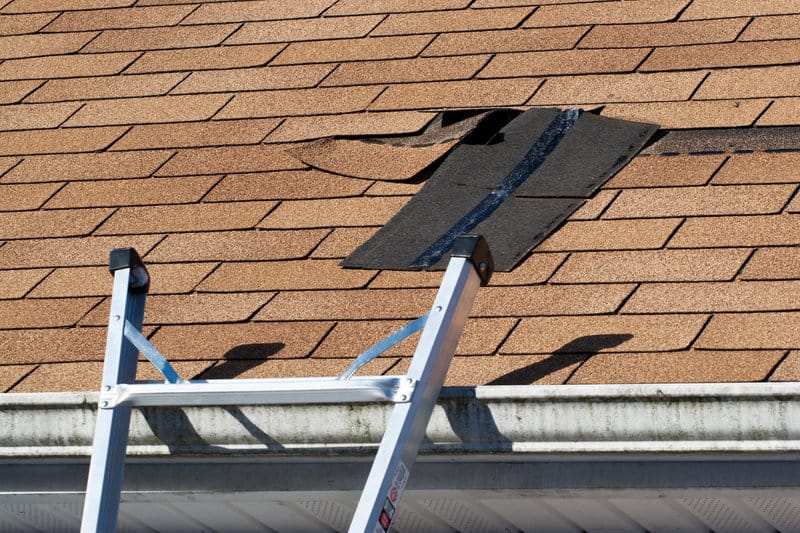
Shingle age past 20 years: Architectural shingles in the Bay Area run 20-25 years. At 20 years, weigh each repair against replacement cost, not just the repair invoice. Homes still carrying original 3-tab shingles from the 1990s have crossed that threshold; 3-tab design life is 15-20 years.
Widespread granule loss: Gutters filling with coarse granular sediment season after season means the UV and fire protection layer is gone across the whole surface. No maintenance restores granules.
Recurring flashing failures: One repair is maintenance. A second repair at the same location within 3-5 years signals an installation problem or a deck that has moved enough to break the seal repeatedly.
Interior staining returning after repair: If a leak returns within two wet seasons, the source was not fully addressed, or the underlayment beneath intact surface material is failing.
Tile roofs with underlayment past 25 years: Clay tile lasts 50-100+ years; concrete tile 30-50 years. The tile underlayment beneath both needs replacement every 20-30 years regardless of tile condition. A tile roof from 1992 may look sound from the street while leaking through failed underlayment seams.
The 25% rule: California building code limits how much of a roof surface can be repaired before full replacement is required. Once 25% of the total surface area has been repaired in a given period (typically 3 years), code may require a complete tear-off.
The cost reality: Preventive maintenance over 10 years runs approximately $5,700. Deferred maintenance leading to emergency replacement with decking work and interior remediation runs approximately $19,000.
A note on pricing: the figures in this section are illustrative industry estimates for planning purposes, not a Pacific Coast Roofing Service quote. Actual project costs depend on roof size, pitch, material, decking condition, and site access. For pricing on your specific home, call (510) 912-5454 for a free no-obligation estimate.
The Cost Gap: Maintenance vs. Emergency Replacement
~$5,700Consistent maintenance over 10 years
~$19,000Emergency replacement with decking and interior remediation
The difference is not just money. Emergency timelines mean less contractor choice, less scheduling flexibility, and work happening during the wet season under pressure.
On winter replacement: Pacific Coast Roofing Service replaces roofs 12 months a year. Modern asphalt shingle systems install in California’s mild climate year-round. Underlayment protects the decking during installation, and experienced crews manage rain timing. Many homeowners who wait for spring find a 10-12 week backlog. Fall and winter projects typically mean faster scheduling with no difference in outcome.
Rainy Season Scheduling Is Open Now
Pacific Coast Roofing Service replaces roofs 12 months a year. Fall and winter bookings typically run 6-8 weeks faster than the spring backlog, which often hits 10-12 weeks. Same result, shorter wait. In the East Bay since 1996. GAF Certified Applicators.
For roof replacement, Pacific Coast Roofing installs GAF and CertainTeed architectural shingles. As a GAF Certified Applicator, the company can offer GAF system warranties covering both materials and labor, available only through certified installers.
FAQ: Bay Area Roof Maintenance Questions
What maintenance should be done on a roof?
At minimum: twice-annual assessments (October before wet season, April after), annual gutter cleaning (quarterly for homes with eucalyptus, pine, or oak overhang), debris removal from valleys and gutters before fire season, and biological growth treatment in spring if moss or algae is present. The full seasonal checklist above covers every item in sequence.
What is the 25% rule in roofing?
California building code limits how much of a roof’s surface can be repaired before a full tear-off is required. Once 25% of the total surface has been repaired within a given period (typically 3 years), code may require complete replacement rather than continued patching. Worth knowing if you are weighing repeated repairs against replacement.
How often should Bay Area homeowners clean their gutters?
Twice a year is the national standard, and it is not enough for most Bay Area homes. Homes with eucalyptus, pine, or oak overhang need quarterly cleaning. The wet season begins in November; gutters must be clear by October.
What ruins asphalt shingles?
Four main causes: pressure washing (strips the granule surface layer), biological growth left untreated (moss rhizoids penetrate the shingle mat and hold moisture), UV exposure on roofs past their prime (asphalt binder dries and cracks once granule protection is gone), and poor original installation (skipped starter strips, insufficient underlayment). Of these, pressure washing is the most preventable.
Is $30,000 too much for a roof replacement?
Bay Area replacement costs vary by size, pitch, material, and decking condition. A full architectural shingle replacement on a typical 2,000-2,500 square foot East Bay home runs $18,000-$28,000 depending on complexity. If a bid is significantly below that range, verify the contractor’s CSLB C-39 license and confirm whether it includes full tear-off, proper underlayment, and all necessary flashing. These figures are general planning ranges, not a Pacific Coast Roofing Service quote. Call (510) 912-5454 for pricing on your specific home.
Can you replace a roof in the rainy season in California?
Yes, and rainy season is actually a good time to schedule. Pacific Coast Roofing Service replaces roofs 12 months a year in the Bay Area. Modern asphalt shingle systems install in California’s mild climate year-round. Underlayment protects the decking during installation, and rain during a project is a timing and crew-management issue. Fall and winter bookings typically have shorter wait times than the spring backlog, which often runs 10-12 weeks. Same result, faster scheduling.
What does a GAF Certified Applicator mean for a homeowner?
GAF Certified Applicators have completed GAF’s training and certification program. GAF system warranties covering both materials and labor are available only through certified applicators. The certification also means installation follows GAF’s specified methods. Pacific Coast Roofing Service is a GAF Certified Applicator.
Your Roof’s Next 12 Months
Two outcomes from this checklist.
If you found no problems: set a reminder for September, keep the checklist accessible for October, and add quarterly gutter reminders if you have tree overhang.
If you found warning signs (roof past 20 years, granules in gutters, ceiling stains, cracked pipe boots, marginal flashing, or tile from the mid-1990s with no underlayment history): if you have a tile roof, or a shingle roof approaching replacement age, contact Pacific Coast Roofing Service. (510) 912-5454. East Bay roofing since 1996. We replace roofs 12 months a year, and we handle tile roof leak repair and preventative maintenance. If you are in the August-October window right now, it is the most consequential one on the calendar. It closes faster than it appears.
Related guides
- How tree care protects your roof — the single biggest source of debris damage in the Bay Area.
- Maintaining a wood shingle roof — extra steps if your roof is wood shake or shingle rather than asphalt or tile.