
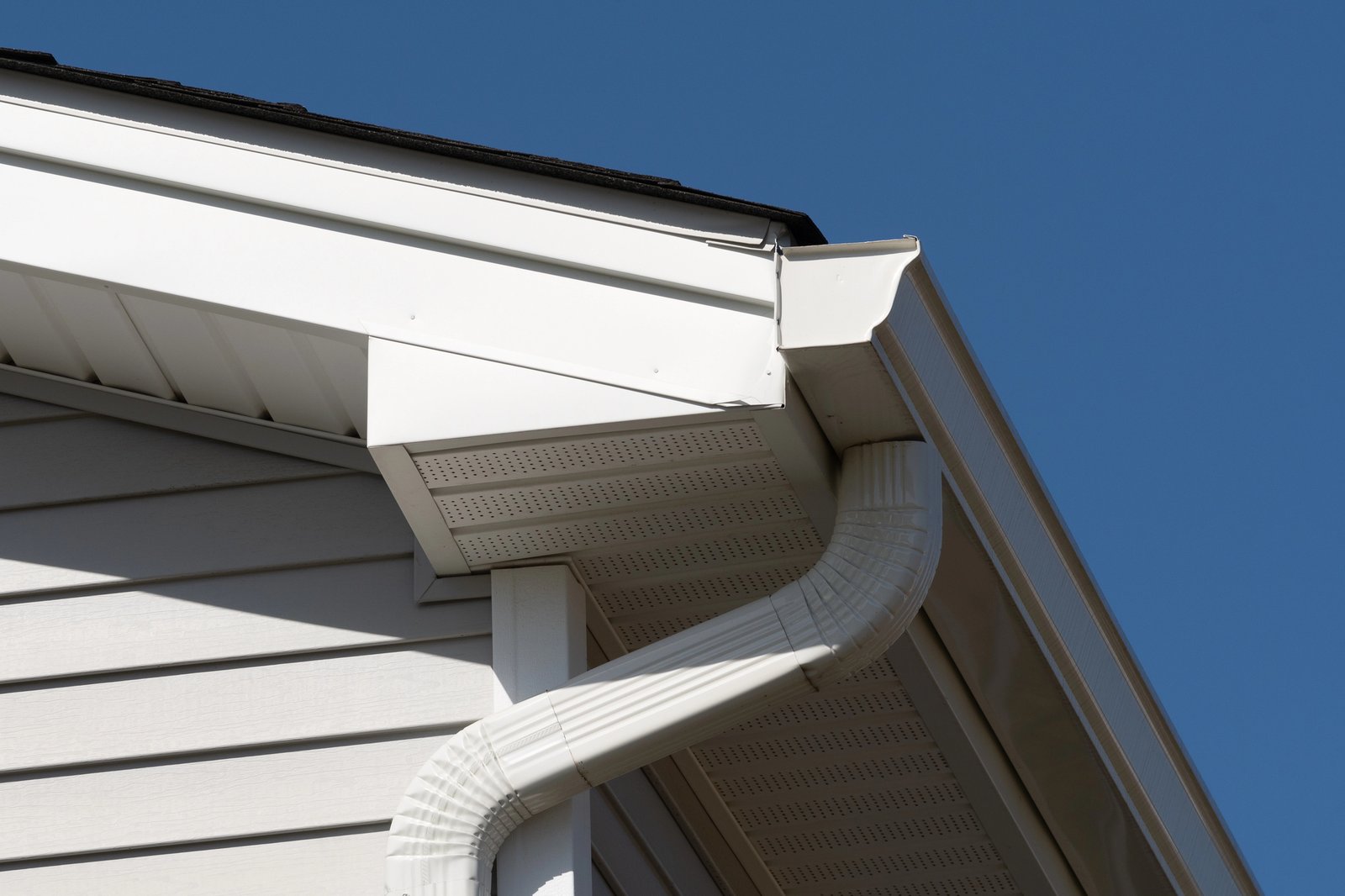
Gutters run along the most visible horizontal edge of your house. Whatever color or style you choose will be visible from the street every day for the next 20 to 30 years. That’s a longer commitment than most people expect when they’re deep in a replacement decision.
This guide covers what you’re actually choosing between: style (K-style vs. half-round, seamless vs. sectional), material (aluminum, copper, galvanized steel, vinyl), color (with specific pairing examples for eight common colors), and what to check before you commit. Since 1996, we’ve seen the combinations that work and the ones that don’t. This post documents those lessons for the five home styles common across PCR’s service area.
Gutter Styles: What You’re Actually Choosing Between
Most of the decisions that follow, including color and material, depend on which gutter style you’re installing. Get this right first.
K-Style Gutters (Ogee Profile)
K-style gutters are the dominant residential profile in the US, and for good reason. The flat back attaches directly to the fascia board without special brackets, which keeps installation labor straightforward. The angular front profile, also called an ogee profile, resembles crown molding and gives it a cleaner look than round profiles on most contemporary homes.
Capacity is a practical advantage: a 5-inch K-style gutter holds roughly 1.2 gallons per linear foot. The downside is the inner corners, which trap leaves and debris. In a tree-dense Bay Area yard with oaks or pines overhead, K-style gutters need cleaning two to four times per year. K-style is the right starting point for most Bay Area homes.
Half-Round Gutters
Half-round gutters have a semicircular cross-section: no corners, no debris traps. Leaves and sediment wash through more completely, which makes them genuinely lower-maintenance in some configurations. The trade-off is real: lower water-holding capacity for the same width, a round-bottom bracket system (which adds labor compared to direct fascia attachment), and an installed cost 50 to 100% higher than equivalent K-style.
Half-round is the right call for craftsman bungalows, Victorians, and Edwardians where architectural authenticity matters. On those homes, the traditional semicircular profile looks at home. On a standard tract build or a contemporary design, it looks wrong.
Seamless vs. Sectional
Seamless gutters are custom-rolled on the installer’s truck to the exact run length of your roof. There are no mid-run joints, which eliminates the primary source of gutter leaks. Sectional gutters come in pre-cut 10-foot lengths joined with connectors and sealant. They’re DIY-viable and cheaper upfront, but every joint is a potential leak point. Sealant degrades, connectors fail, and re-sealing becomes a recurring chore.
Seamless gutters reduce leak risk by roughly 80 to 90% compared to sectional installations and last 20 to 50 years versus sectional joints that typically start leaking within three to five years. For a professional installation on a primary residence, seamless is the standard. Any reputable Bay Area contractor installs seamless as the default. Sectional gutters on a main residence are a sign of either a DIY job or a cut-rate install.
| Style | Best For | Cost Signal |
|---|---|---|
| K-style / ogee (5”) | Most Bay Area homes | $7-12/LF installed (seamless aluminum) |
| K-style / ogee (6”) | Larger homes, steep pitches, high-debris zones | $8-13/LF installed |
| Half-round | Craftsman, Victorian, Edwardian | $10-18/LF installed |
| Seamless | Professional residential install | Standard for any professional job |
Gutter Materials: What Holds Up in the Bay Area
Bay Area conditions are specific: wet, compressed winters (80% of annual rainfall arrives in three to four months), coastal salt air in some zones, and fire-ember risk in hill communities. Material choice is matched to where you live, not picked arbitrarily.
⚠️ Copper Cannot Drain into Aluminum or Steel
If you choose copper gutters, the entire drainage path (gutters, connectors, and downspouts) must be copper or stainless steel. Copper draining into aluminum or galvanized steel creates a galvanic reaction that destroys the adjacent metal at the junction. This is not a slow cosmetic problem. It is a structural failure that typically shows up within a few years. Any contractor who proposes mixing copper gutters with aluminum downspouts should not be on your shortlist.
⚠️ Fire Zone Homeowners: Vinyl Is Off the Table
If your home sits in a Moderate, High, or Very High Fire Hazard Severity Zone, California’s 2025 Wildland-Urban Interface Code (effective January 1, 2026) prohibits vinyl gutters for any permitted work. Vinyl melts under ember exposure and can ignite. Large sections of the East Bay hills and Contra Costa interior fall under these designations. Look up your property at the CAL FIRE website before choosing a material.
Aluminum Gutters
Aluminum is the correct default for most Bay Area homes. It does not rust, handles wet winters well, is lightweight (less stress on the fascia board), and comes in 30+ factory colors. Available in seamless form from any professional installer.
Standard gauge is 0.027 inch. Heavy gauge at 0.032 inch is worth the small upcharge in high-debris zones or anywhere with frequent gutter cleaning and risk of denting. Lifespan: 20 to 30 years. Installed cost: approximately $7 to $12 per linear foot (seamless). A typical Bay Area home requires 150 to 200 linear feet, putting a standard seamless aluminum installation between $1,050 and $2,400 all-in.
For homes near the water in Richmond, Alameda, or the Hayward bayfront, quality aluminum handles most salt-air exposure. Copper is a better long-term choice right on the water.
Copper Gutters
Copper is the premium option with a 50 to 100+ year lifespan. Over five to ten years it develops a natural gray-green patina that actually increases its corrosion resistance. Copper gutters thrive in the coastal and salt-air environments where galvanized steel fails.
Cost: $25 to $50 per linear foot installed, typically four to six times the cost of aluminum. Appropriate for high-value Bay Area homes, craftsman properties where the look matters, or any home where the owner wants to install gutters once for the life of the house.
One critical point: copper cannot drain into aluminum or galvanized steel downspouts. Galvanic corrosion will destroy the adjacent metal at the junction. If you go copper, the entire drainage path (gutters, connectors, downspouts) must be copper or stainless steel.
Galvanized Steel Gutters
Durable and rigid, galvanized steel holds its profile better than aluminum under physical impact. Lifespan: 15 to 25 years. Installed cost: $6 to $15 per linear foot. It is non-combustible and complies with California Chapter 7A for WUI fire zones.
The downside is rust. Once the galvanized coating wears or is scratched, oxidation begins. In the Bay Area’s wet winters or any coastal exposure, galvanized steel needs inspection every few years. It remains a reasonable choice where physical durability is the priority and you accept the maintenance trade-off, but aluminum has largely replaced it in residential work.
Vinyl Gutters
Vinyl is the budget option at $3 to $6 per linear foot installed, and it is the wrong material for most Bay Area homes.
Vinyl fades in UV, cracks in cold, warps in heat, and has a lifespan of 10 to 15 years. More importantly: vinyl is prohibited in California WUI (Wildland-Urban Interface) fire zones under Chapter 7A of the California Building Code. As of January 1, 2026, the 2025 California Wildland-Urban Interface Code requires non-combustible gutters for new construction and renovation in fire zones. Vinyl melts and can ignite under ember exposure.
Large portions of the East Bay hills and Contra Costa interior fall in Moderate, High, or Very High Fire Hazard Severity Zones. If your home is in one of these zones, vinyl is off the table for any permitted gutter work. Check your property’s Fire Hazard Severity Zone at the CAL FIRE website before specifying a material.
Gutter Color Guide
This is the section most people came for. Here are the three strategies that actually work, followed by specific color-to-home pairings.
⭐ The Default Rule: Match the Trim
When in doubt, match the gutters to the fascia and trim color, not the roof and not the siding. Gutters sit at the trim line. White or off-white gutters against white trim disappear into the roofline and let the rest of the house carry the design. This combination works on the majority of Bay Area homes and almost never looks wrong.
Three Strategies for Choosing a Gutter Color
1. Match the trim. This is the most common approach and the most forgiving. White or off-white gutters against white or off-white trim disappear into the roofline and let the rest of the house do the work. Works on most Bay Area stucco homes, craftsman houses with painted trim, and contemporary builds. When in doubt, match the trim.
2. Match the roof. Medium brown, gray, or charcoal gutters matched to an architectural shingle or tile roof create a unified look from eave to ridge. Best on homes where the roofline is a design feature rather than something to minimize.
3. Intentional contrast. Dark gutters on a light house, or copper on brick or cedar. This approach requires more confidence in the decision and looks best on homes with a clear architectural identity: craftsman, midcentury, contemporary. When it works, both the gutters and the house look better than matching would have achieved.
Named Colors with Home Pairing Guidance
White / High-Gloss White Clean, neutral, the most popular gutter color in the US. White seamless aluminum gutters pair with virtually any exterior paint color or material. Best for stucco homes with white or light trim, contemporary builds, and any home where you want the gutters to recede visually. Avoid on homes with dark or heavily saturated exteriors where white will read as a stripe.
Off-White / Cream / Almond A warmer alternative to stark white. Coordinates with cream, beige, or yellow-toned siding and trim. More forgiving than white in coastal zones where salt-air deposits show as a gray cast on lighter powder-coat finishes. Best for Ranch-style, Spanish Colonial, and older stucco homes with warm-toned paint.
Beige / Musket Brown Earth-toned and low-contrast. Pairs naturally with tan, brown, or taupe siding and shingle roofs in warm brown and gray tones. Common on Ranch-style homes in Contra Costa suburbs. Avoid on homes with cool-gray or white exteriors where the warmth of beige creates an awkward mismatch.
Bronze / Weathered Bronze A rich, dark brown with warm undertones. Works well on craftsman bungalows, Edwardians, and any home with wood or brick accents. On the craftsman homes common in El Cerrito and Kensington, bronze or forest green are the colors we install most often. Avoid on modern or minimalist builds where the warmth reads as dated.
Charcoal / Storm Gray Cool, dark, and versatile. Pairs with gray shingle roofs, gray or white siding, and modern exteriors. One of the best choices for midcentury modern and Ranch-style homes in Walnut Creek and Pleasant Hill. Holds up well on south-facing elevations and in coastal fog zones where lighter colors develop chalking over time. Charcoal excels at hiding water streaks and oxidation staining; white and almond show them.
Matte Black Strong and deliberate. Works on modern new construction, contemporary remodels, and homes with black window frames or other dark metal accents. A growing choice on Bay Area spec homes built since 2020. Not appropriate for warm-toned homes (Spanish Colonial, older Ranch) where it reads as harsh.
Forest Green Deep, natural, and architectural. Pairs with craftsman bungalows, homes with wood siding, and properties with mature landscaping. Works alongside copper and weathered bronze on historic East Bay properties. Avoid on homes with no other green elements in the landscape or exterior palette.
Copper (Patina) Not a factory color but a material: copper gutters develop a green-gray patina over five to ten years. The look is traditional, distinctive, and works best on brick exteriors, Victorian homes, and craftsman properties. The patina is expected and protective, not damage. If you want the warm copper tone permanently, expect regular maintenance, since patina is the natural state.
Soffit, Fascia, and Downspout Color Coordination
Gutters sit at the fascia board line, so the color choice involves more than the siding. A short rule of thumb:
- Gutters typically coordinate with the trim color (most common) or the roof color.
- Downspouts typically match the siding color so they disappear against the wall, or match the gutters for a unified look along the roofline. A 5-inch K-style run uses a 2×3-inch or 3×4-inch downspout; 6-inch K-style requires a 3×4-inch downspout minimum.
- Soffit is the backdrop behind the gutter. Most homes have white or off-white soffits; gutters in the same color range blend into that transition.
When in doubt: gutters to match trim, downspouts to match siding. That combination reads as intentional rather than accidental.
Gutter Colors by Bay Area Home Style
No other guide covers this for Bay Area homes specifically. Here’s what we see working across the home styles in our service area.
💡 Get HOA Approval in Writing Before You Order
Since 1996, the most common avoidable mistake we’ve seen is homeowners ordering gutters before confirming the color with their HOA. Standard aluminum colors (white, almond, bronze, gray) almost always pass review. Non-standard choices (copper, matte black, forest green) may require a formal vote. A written approval costs nothing. A color change after installation costs a lot.
Craftsman bungalow (El Cerrito, Kensington, Berkeley, Albany): Bronze, forest green, and weathered brown are the natural fits. Half-round gutters look at home on these properties. Copper is a premium option that rewards the architectural investment. Avoid stark white or matte black, which fight the warm character of craftsman detailing.
Victorian / Edwardian (Oakland fringe, Richmond districts): Copper, off-white, and dark bronze. These homes often have decorative eave details that reward a finish with visual character. Copper in particular ages into something that looks like it belongs on the building. Avoid charcoal and matte black, which feel too contemporary for the style.
Ranch / Mid-Century Modern (Walnut Creek, Pleasant Hill, San Ramon, Concord): Charcoal, matte black, and warm gray. Clean lines and a muted palette. The goal is for the gutters to read as part of the roofline, not as an interruption. Avoid beige and bronze, which can feel heavy on low-slope Ranch profiles.
Spanish Colonial / Mediterranean (inland warmer areas, parts of Concord and Danville): Weathered bronze and warm brown. The warm earth tones of the style call for gutters in the same register. Avoid stark white or black, which create too much contrast against clay tile roofs and stucco walls.
Modern new construction (new builds across the service area): Matte black and dark charcoal are the current dominant choices on new Bay Area spec homes. Where the architecture uses a raw or industrial palette, a natural aluminum-look finish (unpainted) also works. White reads as dated on truly contemporary designs.
HOA note: Many planned communities in Danville, Pleasanton, Walnut Creek, and Orinda require architectural review before any exterior color change. Under California Civil Code 4765, HOA architectural rules must be written and objective. Check your CC&Rs before committing to a color. Standard aluminum colors (white, almond, bronze, gray) are almost always within HOA guidelines, but get written approval before ordering. Since 1996, the most common mistake we’ve seen is homeowners ordering gutters before confirming their color with the HOA.
Color Durability: What Holds Up Over Time
Not all colors age the same way in Bay Area conditions.
Dark colors (charcoal, black, bronze) hide water streaks and oxidation staining better than light colors. In the Bay Area’s coastal fog zones, including the Richmond and Alameda waterfronts and the Berkeley hills, this matters more than it does in inland areas like Danville or Livermore where UV is the bigger factor.
Factory powder-coat and baked-enamel finishes hold color for 20+ years in most climates. Field-painted gutters and cheaper factory finishes fade significantly faster. Any professional installation uses factory-finished seamless stock. If a contractor proposes painting your gutters on-site, ask why.
Chalking, a white powdery oxidation, can develop on lighter aluminum finishes over time, especially on south-facing elevations with heavy UV exposure. Coastal fog combined with salt air in Richmond, Alameda, and the Berkeley waterfront slightly accelerates this process on lighter colors. If you’re in a coastal zone, charcoal or bronze will hold their appearance longer than white or almond.
Copper and zinc develop their own patina regardless of any factory finish. This is expected and protective, not damage. The Bay Area has no significant freeze-thaw cycle, so cold-weather cracking is a smaller concern here than UV and moisture.
A Few Practical Checks Before You Commit
Before you finalize a color and call a contractor, four things to confirm:
💡 Ask the Estimator to Check the Fascia First
Rotted fascia boards are a common find during gutter estimates on Bay Area homes, particularly after a wet winter. Fascia replacement runs $6 to $15 per linear foot and has to happen before the new gutters go on. A reputable contractor will flag this during the estimate visit. If the estimator doesn’t mention the fascia condition at all, that’s worth asking about directly.
1. Check your HOA CC&Rs first. If you’re in a planned community, get written approval before ordering. California Civil Code 4765 requires HOA architectural rules to be clear and objective. Standard colors typically pass without issue, but non-standard choices (copper, matte black, forest green) may require review. Get it in writing.
2. Know your fire zone status. If your home is in a WUI zone, vinyl is prohibited under Chapter 7A and a debris-preventing micro-mesh gutter guard may be required for any permitted work. The 2025 CWUIC (effective January 1, 2026) mandates ember-resistant, debris-preventing gutter guards in fire zones, not only non-combustible gutter material. Look up your property’s Fire Hazard Severity Zone at the CAL FIRE website before selecting a material.
3. Have the fascia inspected. Bay Area wet winters are hard on painted wood fascia boards. Many homeowners find out about rotted fascia only when a contractor arrives for the gutter estimate. Fascia replacement runs $6 to $15 per linear foot and must happen before new gutters go on. A reputable contractor flags this during the estimate; a cut-rate contractor installs over it and lets the new gutters sag within two years. Also confirm drip edge flashing is intact, since failing drip edge directs roof runoff behind the gutter rather than into it.
4. Consider 6-inch gutters on larger homes. The standard 5-inch K-style gutter holds 1.2 gallons per linear foot. The 6-inch version holds 2.0 gallons, a 50% capacity increase. The cost difference is roughly $0.50 to $1.00 per linear foot, or $100 to $300 for a whole house. Bay Area atmospheric rivers can deliver three to eight inches of rain in 24 to 48 hours. On any home over 2,000 square feet, any home with a steep pitch, or any home with heavy oak or pine debris overhead, that conversation is worth having. The NRCS Design Guide PA-1 recommends 6-inch K-style gutters for roof drainage areas exceeding approximately 5,500 adjusted square feet per run.
Common Gutter Color Questions
Should gutters match the roof or the house?
Match the trim first, not the roof or siding. Gutters sit at the fascia line, which is part of the trim system. White or off-white gutters against white trim are the most forgiving combination for most Bay Area homes. Matching the roof works well when the roofline is a design feature you want to emphasize. Matching the siding works when you want the gutters to disappear entirely. All three are valid; trim-match is the safest default.
Should gutters be lighter or darker than the roof?
Either can work, but the more important relationship is between the gutters and the fascia/trim, not the roof. If you’re matching the roof, staying within one shade darker than the roof surface creates a subtle, unified look. Gutters noticeably lighter than the roof tend to draw attention rather than blend.
Should gutters and downspouts be the same color?
Not necessarily. Gutters typically match the trim. Downspouts typically match the siding so they visually disappear against the wall on the way to the ground. Both matching is also a valid choice for a consistent, intentional look. The combination to avoid: gutters and downspouts in two different colors with no clear logic. It reads as accidental.
What is the most popular gutter color?
White is the most common gutter color in the US, and it’s the right choice for the majority of homes with white or light-colored trim. In the Bay Area specifically, white and almond are the most common factory colors installed. Bronze and charcoal are the next most requested for homes where the homeowner wants more character.
Should my gutters be the same color as my house?
Not usually. Matching gutters to siding tends to make the gutters look like an afterthought rather than a finished detail. Matching the trim creates a more intentional look. The exception is when you specifically want the gutters to disappear, in which case matching the siding and selecting downspouts to match as well achieves that effect.
Can gutter color affect home value?
Gutters in poor condition (streaked, sagging, mismatched) subtract from first impressions and from any exterior appraisal. Gutters that coordinate with the trim and look well-maintained add to curb appeal. The effect is hard to isolate in dollar terms, but for any listing or appraisal where first impressions matter, exterior details in good condition support a stronger presentation.
What is a gutter color visualizer?
Color visualizer tools let you upload a photo of your home and preview different gutter colors before committing. Several gutter manufacturers offer these online. If you’re uncertain between two or three color choices, a visualizer can help you see the combination on a photo that approximates your home. When we come out for an estimate, we can also bring physical color samples so you can hold them against your fascia and siding in actual light conditions before ordering.
Ready to Install? Here’s What to Expect from Pacific Coast Roofing
If you’ve worked through the questions above and are ready to move from research to installation, here’s how to reach us.
Pacific Coast Roofing has been installing seamless gutters on Bay Area homes since 1996, across Contra Costa, Alameda, and Solano counties. We’re GAF Certified Applicators, and gutter installation is a core service, not a side offering. Our crews carry a California C-39 roofing license and operate out of El Sobrante.
When you call, we’ll come out, look at the existing fascia condition, discuss size and material options based on your specific roof, and give you a free written estimate. No upsells, no pressure.
See what a gutter installation involves on our gutter installation service page, or call us directly at (510) 912-5454.