
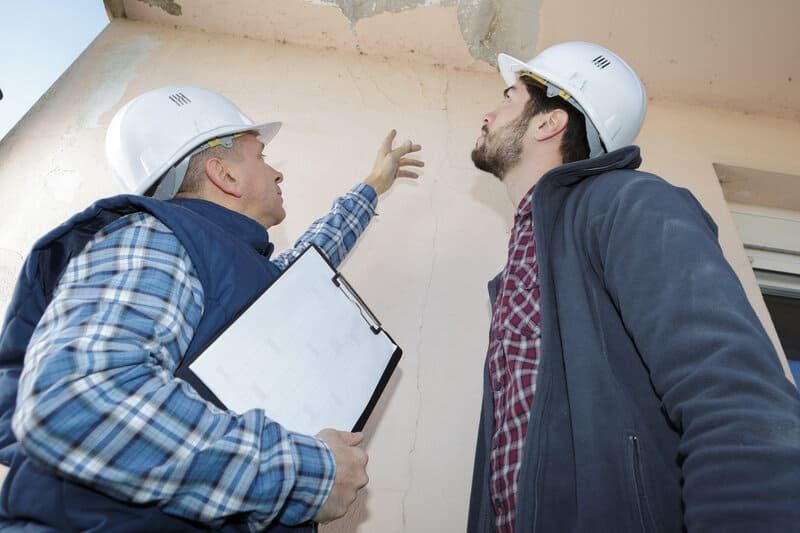
Standing in your yard, you can see your roof. You can spot a missing shingle, notice a dark stain near the chimney, or tell that the ridge looks a little off from where it did five years ago. That observation is worth something.
But a roof is a system: shingles, flashing, underlayment, decking, ventilation, and drainage all working together. From the ground, you see one layer of it. A roofer walking the surface sees the rest.
If you’re trying to figure out whether your roof has a problem in the first place, our guide to signs you need a new roof is the right starting point. This post is for a different moment: you’ve noticed something, or you know the roof is aging and you want a professional set of eyes on it. Here’s what that professional look actually adds, and what PCR’s free replacement assessment covers.
What the Ground-Level View Misses
Most homeowners do their version of a roof check from the driveway, maybe with binoculars. What they can see is useful. What they can’t see is often the part that matters.
⚠️ The Cost You Don’t See Coming
Soft or delaminated roof decking is the most common unexpected cost in a Bay Area replacement job. A roofer walking your roof can feel it underfoot before a single shingle comes off. Discovering it at bid time means you can budget for it. Discovering it mid-job, after the old roof is already stripped, means deciding under pressure with your house open to the sky.
Flashing failure at penetrations. Chimney flashing, valley flashing, vent pipe boots, and skylight curbs fail from above. The sealant cracks, metal edges lift from thermal expansion cycles, and corrosion begins at the lap joint. From the street, the roof can look intact. From the surface, a roofer sees the lifted edge, the rust bleed, and the cracked lap sealant where water has been entering with every rain. Most interior leaks trace back to flashing failure, not shingle failure. You cannot assess this reliably from the yard. You can also examine drip edge condition at the eave, which fails at similar spots but is invisible from ground level.
Soft decking. Plywood or OSB roof decking that has been wet-dry cycling for years starts to delaminate and compress. It looks like a normal roof from the ground. Step on it, and it gives. When we walk a roof, we feel for spongy sections that indicate rot or delamination underneath. This matters for a practical reason: soft OSB or plywood decking cannot hold roofing fasteners correctly. New asphalt shingles nailed into compromised decking will not hold in a wind event, and the decking must be replaced before the new roof goes down. The cost of deck repair is something every homeowner deserves to know before committing to a replacement quote, not find out about afterward.
Ventilation balance. Ridge vent and soffit intake work as a pair. Air enters at the soffit, moves through the attic, and exits at the ridge. When that ratio is off, heat and moisture build up under the decking. The result is premature shingle failure from the inside: architectural shingles that look like weather damage but are actually a ventilation problem. It is not visible from the ground. A roofer checks both intake and exhaust capacity and can tell whether the system is balanced or whether a new roof will have the same shortened lifespan as the one it is replacing.
Valley wear patterns. Roof valleys channel water from two planes into a single drainage path. They handle more water, more debris, and more thermal stress than any other section of the roof. The granule wear pattern in a valley tells us whether that section is a near-term failure point, even when the surrounding field shingles still look acceptable from the street. A valley that is failing quietly will cause the next leak. The shingles around it will not.
Attic moisture indicators. When attic access is available, a roofer looking inside can see water staining on rafters, wet or compressed insulation, mold on joists, or daylight through the deck. These confirm what the exterior shows. Sometimes they reveal problems with no visible exterior sign yet. We have walked attics where the homeowner had no idea the deck was stained because the ceiling below was still dry. The roof had another season before a leak appeared in the living space. Finding it early changes what the repair or replacement timeline looks like.
Fastener pattern. Shingles improperly nailed (too high, too few, or over-driven) lose wind resistance without any surface sign. A roofer can assess fastener pattern across the field and spot exposed nail heads where the sealing strip has failed, letting water wick down the shank with every rain. These are installation problems that a good assessment catches. They are invisible from the ground and invisible in a home inspection.
Bay Area Conditions That Make Professional Assessment More Important
The Bay Area is not a typical roofing market. Coastal proximity, fog patterns, and microclimate variation create conditions that accelerate shingle aging and concentrate moisture at specific points on the roof system.
ℹ️ Bay Area Lifespan Reality
A 30-year architectural shingle carries a national average lifespan. Bay Area coastal and bay-adjacent neighborhoods are not average. Salt air, marine fog, and UV intensity in this market typically shorten that timeline by three to five years. A roof at year 22 in Oakland or Richmond may be performing like a roof at year 27 in Sacramento. That gap is exactly what a professional assessment measures.
Salt air in coastal and bay-adjacent neighborhoods, including Oakland, Berkeley, Richmond, Alameda, and El Cerrito, settles on roofing materials year-round. Salt particles break down the protective granule coating on asphalt shingles and accelerate corrosion at metal flashing, fasteners, and valley joints. A Bay Area asphalt shingle roof in a coastal-exposure zone may show end-of-life indicators three to five years earlier than the nominal design lifespan suggests. The National Roofing Contractors Association (NRCA) guidance on material lifespans is based on national averages; Bay Area homeowners should apply a coastal adjustment when estimating how much life their current roof has left.
The rainy season concentrates the risk further. The Bay Area receives most of its annual precipitation between October and April in short, intense storm events rather than steady rain spread across the year. An aged asphalt shingle roof gets tested hard in a narrow window. Flashing fatigue, compromised underlayment, and soft decking that might go unnoticed through a dry summer can admit significant water during a single November storm. A professional assessment before rainy season gives you the information you need to make a decision on your own timeline, not after ceiling stains have appeared.
East Bay hillside neighborhoods, including Kensington, Orinda, and parts of Oakland and El Cerrito, also carry added risk from mature tree canopy. Shade, organic debris accumulation, and north-facing roof planes create conditions that accelerate moss growth. Green raised moss patches on an older roof indicate root penetration that lifts shingle edges and reaches the underlayment below. A professional assessment can determine whether the moss is surface-only or whether the shingles beneath it have already been compromised.
When It Makes Sense to Call
This is not a list of signs your roof is failing. It is a list of situations where a professional look is worth scheduling, regardless of what you can or cannot see from the yard.
💡 If You’re Considering Solar
Get the roof assessed before you sign anything. A solar array that goes on a roof needing replacement in 5 years will need to come off when that replacement happens, adding removal and reinstallation costs to the job. The right order is: roof assessment, then solar contract. That sequence takes a phone call and a few days. Reversing it takes considerably more.
After a storm. Wind events and falling debris cause damage that looks minor from the ground and is significant at the surface. Missing shingles are obvious. Lifted flashing, cracked ridge cap, and fastener blow-out are not. Catch storm damage before the next rain event, not after the ceiling stains appear.
Before listing a home for sale. Buyers order their own inspection. A roof problem found at that stage complicates the sale and forces decisions under pressure. A professional assessment before listing lets you know what is actually there and handle it on your own timeline.
Before adding solar panels. A solar installation is warrantied for 25 years or more. Putting it on a roof that needs replacement in five years means removing the array to replace the roof later, paying for two sets of penetrations, and dealing with warranty complications on both ends. The right time for an assessment is before the solar contract is signed.
When the roof is 15 years or older and has never been assessed. Age alone is not a replacement trigger, but it is a professional-assessment trigger. A Bay Area asphalt shingle roof at 15 years is approaching the window where conditions worth knowing about may be developing out of sight. Coastal salt air, fog, and UV exposure in this market shorten the nominal lifespan of asphalt products by two to five years compared to national averages.
When you’ve noticed something but are not sure what it means. Granules in the gutter. A soft spot in the ceiling after rain. A shingle that looks different from the others. These are reasons to call, not reasons to wait and watch.
What PCR’s Free Assessment Covers
Here is where the terminology matters. Some roofing companies offer paid roof inspections as a standalone service, typically $150 to $400, and provide a written report at the end. PCR does not work that way.
When PCR comes out, the assessment is part of the replacement scoping process. We look at the roof, tell you honestly what we find, and provide a quote if replacement makes sense. There is no charge either way, whether you proceed with us or not.
At a high level, a PCR free roof assessment covers:
- Walking the roof surface: shingle condition, ridge cap, valleys, and visible penetrations
- Flashing at all penetrations (chimney, skylights, vent pipes) and along the valleys
- Gutters and drainage
- Attic access if available: water staining, deck condition, ventilation balance
- Photos of conditions worth documenting
- A straight read at the end: whether replacement makes sense, what the alternatives are if it does not, and what a roof replacement would cost if it does
Not every roof that gets assessed needs immediate replacement. If the roof has a few years of life left, we say so. That is the kind of contractor worth calling.
For a full walkthrough of what happens during the visit from start to finish, see our guide to what happens during a professional roof assessment.
Paid Inspection vs. Free Assessment: What the Difference Means
When homeowners search for a professional roof inspection, they often assume that means paying for a report. Some contractors do work that way. The homeowner pays for the contractor’s time, gets a written document, and then has to hire someone separately to do the work if anything needs to happen.
🎯 Schedule a Free Assessment
Pacific Coast Roofing Service has been assessing and replacing roofs across the Bay Area since 1996. The assessment is free. If replacement is the right call, you get a quote. If it isn’t, we tell you that too. Either way, you know what your roof is actually doing.
PCR’s model is different because the assessment is part of how we scope a job. We come out, evaluate the roof, and give you an honest read. If replacement is the right call, you get a quote. If it is not, we tell you that too. No charge for the visit in either case.
For the homeowner, the practical difference is this: a paid inspection gives you a report. A free replacement assessment from PCR gives you a report, a quote if applicable, and access to a GAF Certified Applicator who can do the work if the assessment shows work is needed. PCR has held GAF Certified Applicator status as part of our commitment to installation quality and the warranty coverage that comes with it. GAF System Plus and Golden Pledge warranty tiers, which include workmanship guarantees not available from uncertified contractors, are only accessible through certified installers.
If you are building your list of questions before calling anyone, our questions to ask a roofing contractor and roofing quote checklist are worth reading first.
Call for a Free Assessment
Pacific Coast Roofing Service has been assessing and replacing roofs across the Bay Area since 1996. More than 30 years in this market means we have walked roofs in every microclimate PCR serves, from the salt-air neighborhoods along the bay shoreline to the tree-canopied hillside neighborhoods in the East Bay. When we walk a roof, we check everything described in this post: the flashing, the deck, the ventilation, the valleys, and the attic, not just the shingles visible from the street.
The assessment is free. The call takes a few minutes.
Call (510) 912-5454. PCR serves the greater Bay Area, Monday through Friday 7am to 6pm, Saturday 9am to 3pm.
Questions About Professional Roof Assessments
What does a roofer look for during a roof assessment?
A roofer checks conditions invisible from the ground: flashing at chimneys, valleys, and vent pipes; soft or delaminated OSB or plywood decking; granule wear patterns in valleys; ventilation balance between ridge vent and soffit intake; and attic moisture indicators if access is available. They also assess shingle condition, ridge cap, gutters, and fastener pattern across the field. The surface-level view homeowners get from the yard is one layer of a multi-layer roof system.
Is a roof inspection the same as a roof assessment?
Not always. Some companies offer paid roof inspections as a standalone service, typically $150 to $400, resulting in a written report. PCR offers a free replacement assessment: we come out, evaluate the roof, and give you an honest read plus a replacement quote if applicable. No charge either way. It is part of the replacement scoping process, not a separate billed service.
When should I have a professional look at my roof?
After any storm, before listing a home for sale, before a solar installation, when the roof is 15 or more years old and has never been assessed, or any time you notice something that does not look right (granules in the gutter, a soft spot after rain, a shingle that looks out of place). These situations are worth a call before a visible leak confirms what the roof was already telling you.
How long does a professional roof assessment take?
Most assessments take 30 to 60 minutes depending on roof size and complexity. A simple ranch-style home takes less time than a multi-plane roof with a chimney, skylights, and multiple penetrations. If attic access is available, add another 10 to 15 minutes. At the end, the homeowner gets a straight answer about what is there and what, if anything, needs to happen next.